How Does the War with Iran Impact Agriculture in 2026? | Prices, Trade & Farmland
By Halderman
Uncertainty is a word most people dislike and one that always brings some level of fear. Each year at Halderman, at least semi‑annually, our team discusses our thoughts and predictions for the land market over the coming 6–12 months. Our goal is to develop a common thought process that all our representatives can share with clients. Of course, we also discuss what could derail those predictions and what potential “black swan” events could emerge.
In 2026, no one predicted a war with Iran. Could this conflict become the black swan event of 2026, like COVID‑19 in 2020 or the banking crisis in 2023? While the conflict is only a month or so old, it already created far‑reaching impacts on agriculture. Below are factors to consider as they relate to the remainder of 2026.
Fertilizer Prices
Fertilizer prices are rising, and in the case of nitrogen fertilizers, significantly (with increases of 30–40%). Farmers who purchased their fertility needs last fall are set having locked in prices. However, those who did not secure nitrogen for this year’s corn or wheat crops may now be rethinking acreage allocations, crop rotations, and production plans due to higher input costs.
Some analysts believe corn acres may decline, while others disagree. Much will depend on weather conditions over the next two months. Approximately 24% of the world’s ammonium nitrate passes through the Strait of Hormuz, which remains locked down in early April, prime delivery time for the 2026 crop year.
 Fuel Prices
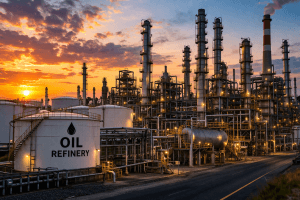
Fuel prices tell a similar story. Like ammonium nitrate, a significant portion of the world’s oil passes through the Strait of Hormuz. As a result, oil prices spiked over the past month to well above $100 per barrel. While this benefits oil producers, it negatively impacts gasoline and diesel consumers, with prices rising 25% or more.
As farmers prepare to head to the fields, these higher fuel prices directly increase production costs.
Global Trade
Although the conflict does not directly disrupt most grain shipments, China’s closer alignment with Iran does not help U.S. trade negotiations. President Trump was to meet with Chinese President Xi on April 4–5, but that meeting was delayed by a month or more and may not occur at all.
Soybean producers hoped the summit would lead to increased Chinese purchases of U.S. soybeans; for now, those expectations remain unmet, with few, if any, new sales occurring.
Interest Rates
Prior to the conflict, economists predicted one or two 25‑basis‑point rate cuts by the Federal Reserve in 2026. Now, heightened inflation concerns, largely driven by higher fuel prices, led the Fed to discuss the possibility of rate hikes instead. Higher interest rates increase borrowing costs across the economy and can slow overall economic activity, including farmland investment.
 Inflation
Inflation is generally supportive of commodity prices and land values. Thus far, commodity prices increased modestly but are barely above breakeven levels. Given the broader uncertainty in the market, inflation has not yet translated into higher land values. In fact, farmland in the first quarter of 2026 has been steady to trending down.
Over time, inflation could still support land values, but that has yet to materialize.
Chaos in Financial Markets
Financial markets are experiencing significant daily volatility. Stock markets, interest rates, and commodity prices swing widely based on headlines, social media posts, or announcements suggesting the conflict may be nearing an end, only to reverse course the next day as tensions escalate again.
This ongoing chaos and uncertainty make participants more cautious; a trend clearly reflected in farmland markets and auction bidding behavior.
Looking Ahead
What does this conflict mean for the remainder of 2026? It is impossible to predict with certainty. In the near term, however, the prevailing environment of chaos and uncertainty appears to be fostering increased caution and concern. While the land market is currently trending weaker, we see daily that conditions can change quickly.
Halderman remains committed to closely monitoring developments and adapting to changing conditions, always keeping our clients’ objectives at the forefront. If you own farmland and would like to see how we can help you with professional farm management, or you need help diversifying your portfolio with a stable asset like farmland, give us a call.